
The word "educational" has a way of draining the excitement out of a school outing. Say it to a class and you can watch shoulders slump. But the science is clear on this: children retain far more when they do a thing than when they're told about it. The best educational trips don't feel like lessons at all — and that's exactly the point.
At Questworld Arena inside Marina Mall, the STEM isn't bolted on as a token gesture — it's baked into the games themselves. Students spend the day playing, and along the way they brush up against robotics, physics, spatial computing and engineering without a single worksheet. None of it feels like a lesson, yet the concepts land because students are experiencing them rather than memorising them. This is what learning-through-doing looks like when it's done right.
Why hands-on beats a textbook
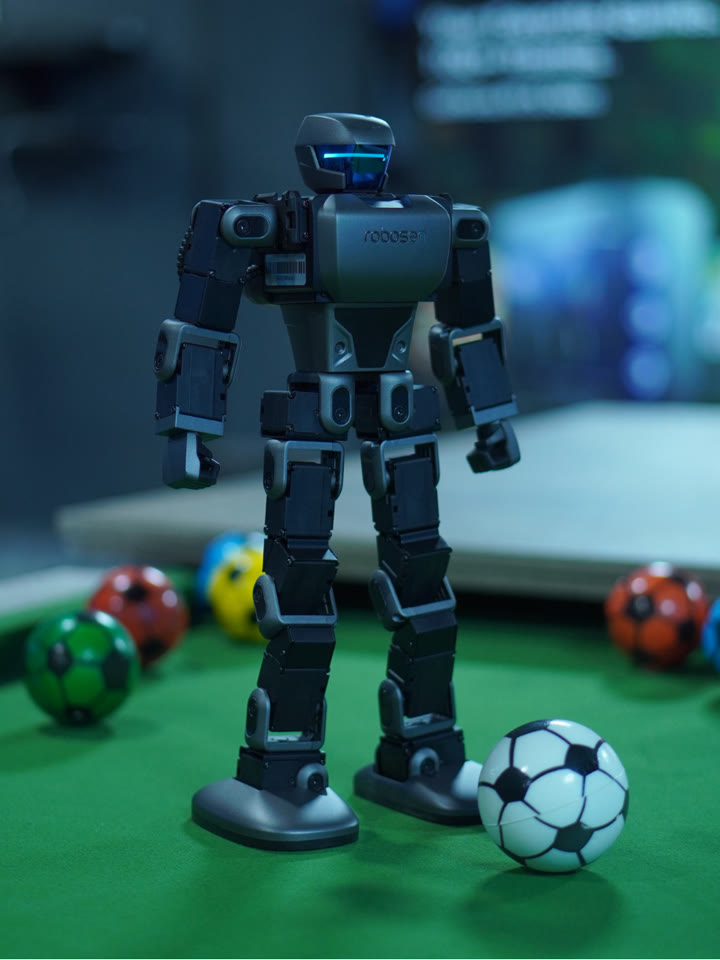
A diagram of a robot in a science book is a flat, forgettable thing. Watching a Robosen K1 robot read the field, calculate a move and strike a ball is something else entirely — suddenly the ideas of sensors, actuators and programmed logic have a face. Studies of learning have long shown that active, first-hand experience anchors concepts in memory far more firmly than passive reading does. That shift from abstract to tangible is where real understanding takes root, and it's the whole reason experiential venues make such strong school excursion destinations.
The STEM hidden inside the fun
Almost every attraction on the floor carries a genuine learning thread, if you know where to look:
- Robotics — Robosen K1 robot soccer shows programmable machines making real-time decisions, an approachable gateway to coding and automation.
- Immersive computing — KAT VR and virtual reality demonstrate motion tracking, 3D rendering and how software builds convincing worlds.
- Aerodynamics and control — the FPV Racing Simulator introduces the physics of drone flight, pitch, thrust and split-second reaction.
- Force and motion — the Motion Arena and Laser Dance turn Newton's laws into something students feel in their own muscles, from momentum and reaction time to balance and acceleration.
An immersive lesson they won't forget
There's a reason immersion is such a buzzword in modern education. When a student stands on the KAT VR treadmill and physically walks through a rendered world, they're not just being entertained — they're experiencing the very concept of virtual environments first-hand. It sticks in a way a slide never could. If you want to understand why, our piece on the immersive gaming experience unpacks what "immersion" really means and why it changes how we absorb information.
Safe, supervised and easy to manage
None of the learning matters if the logistics are a nightmare, so this is the reassuring part. The arena is entirely indoor, air-conditioned and hygienic, with staff supervising every zone. Student groups stay within one enclosed, well-lit space — no traffic, no weather, no wandering. For teachers and parents alike, that controlled environment removes most of the anxiety that comes with taking a class out of the building.
Bookings that work for schools and colleges
Questworld comfortably hosts groups from 10 to 100+, with clear per-head packages — ₹750 on weekdays, ₹950 on weekends — so budgeting per student is simple and predictable, which matters when you're collecting fees and answering to parents. Weekdays are quieter and the natural choice for an organised educational visit, giving your group more space and shorter waits at each attraction. The team can also help sequence a large class through the floor so the day flows without long queues, and can advise on which attractions suit different age groups best. The arena sits at LG 016 inside The Marina Mall on Rajiv Gandhi Salai (OMR), Egattur, easy to reach by bus from schools and colleges across the OMR belt, and open daily from 10 AM to 10:30 PM. A quick WhatsApp message is all it takes to line up a date and a headcount.
Turning a fun day into a real learning outcome
The value of an experiential trip multiplies when you frame it well. A little context before the visit — a quick classroom chat about what robotics is, or how virtual reality tricks the brain into believing a rendered world — primes students to notice the science while they play, rather than treating it as pure entertainment. Then the attractions become live demonstrations of ideas they've just heard about, and the connection clicks into place naturally.
Afterwards is where it really pays off. Ask each student to explain the technology behind their favourite game and you'll get a room full of genuine curiosity instead of blank stares. Robosen K1 opens a conversation about sensors, logic and automation; the FPV simulator leads into forces, thrust and control systems; VR sparks questions about how computers build and track 3D space. These are syllabus concepts, but arriving through lived experience they land with a weight a textbook rarely achieves. For schools and colleges wanting measurable takeaways from a day out, that pre-and-post structure turns a great trip into a genuine teaching tool.
Give students a day where the science moves, lights up and talks back, and you'll find the lesson outlasts the trip. That's the quiet power of putting STEM and play in the same room.